Monday, May 31, 2021


-6 P.M.
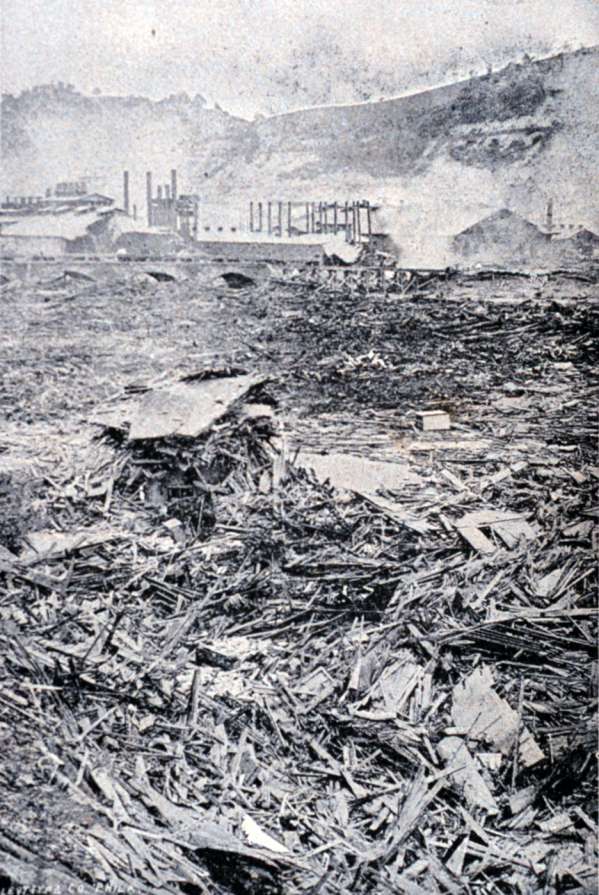
...by six o'clock the whole monstrous pile had become a funeral pyre for perhaps as many as eighty people trapped inside.
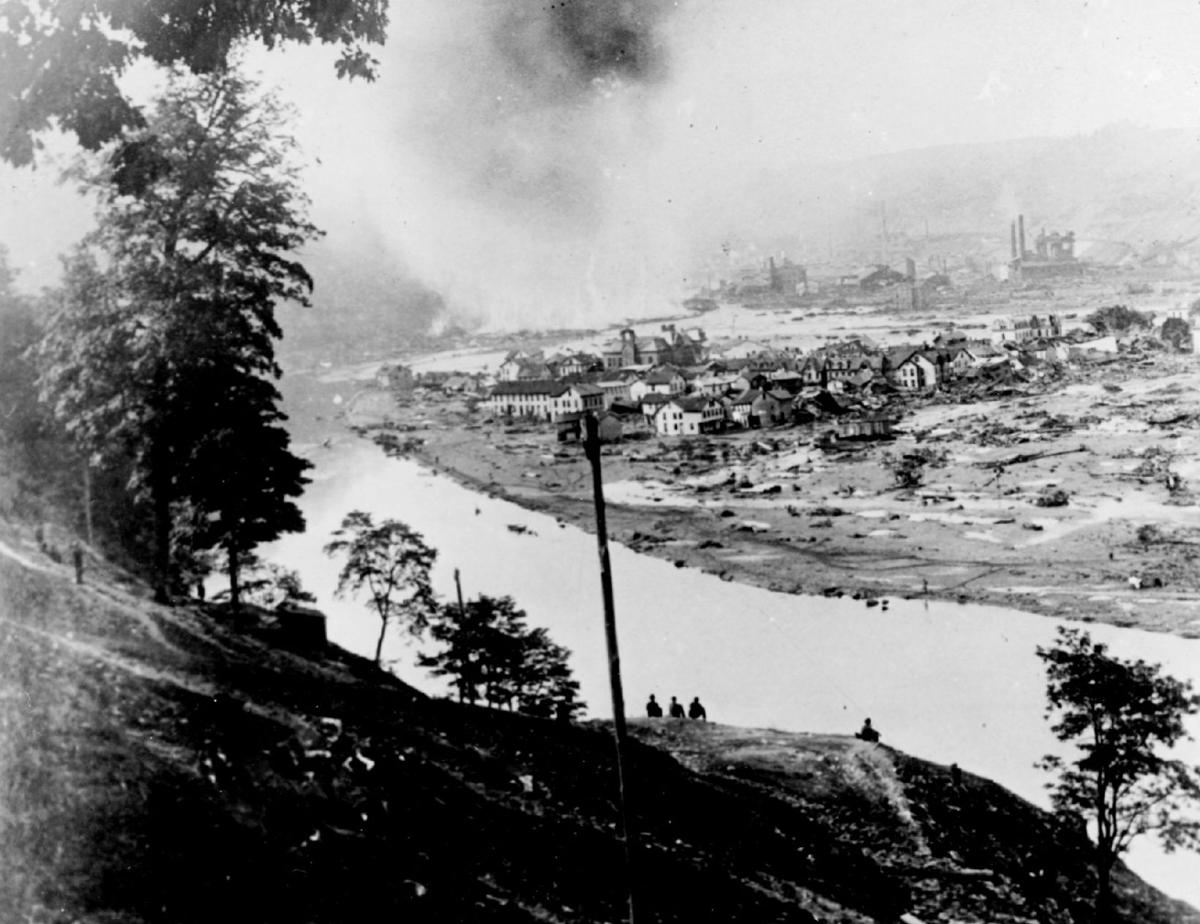

-4:15 P.M.


Modern dam-breach computer modeling reveals that it took approximately 65 minutes for most of the lake to empty after the dam began to fail.

-4:09 P.M.
-4:07 p.m.
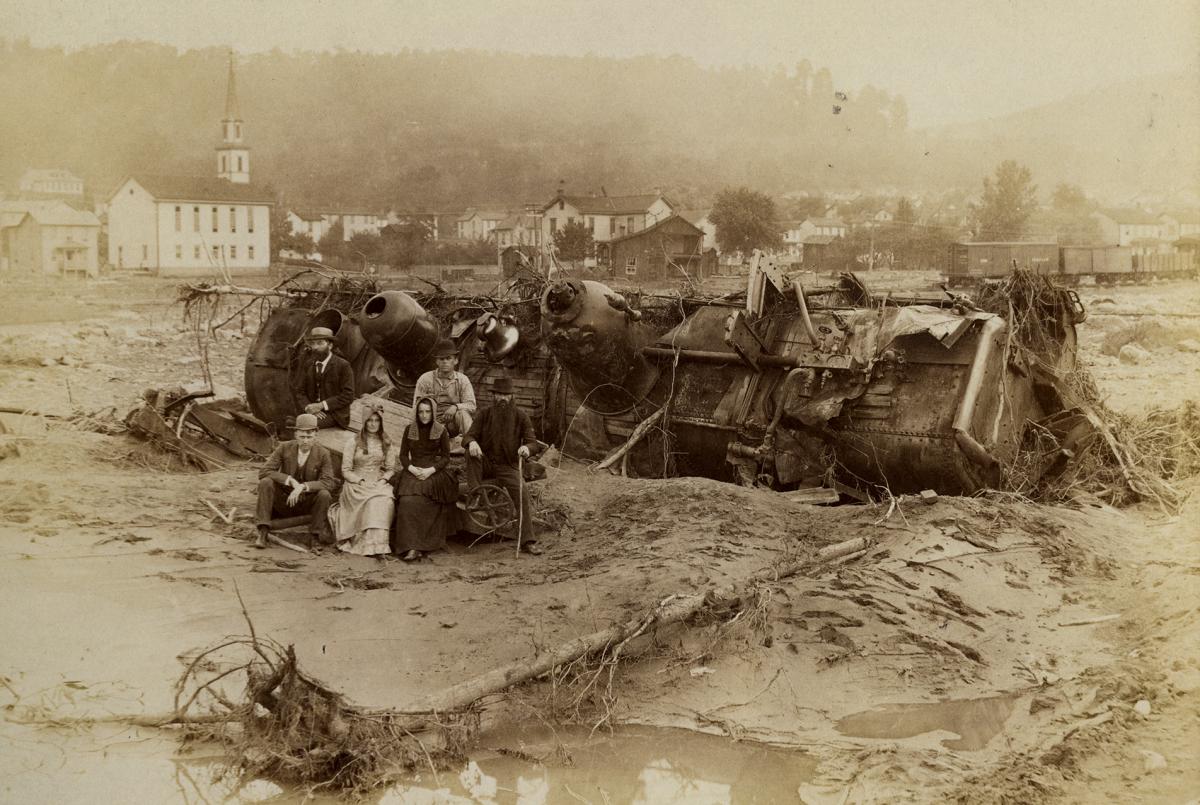
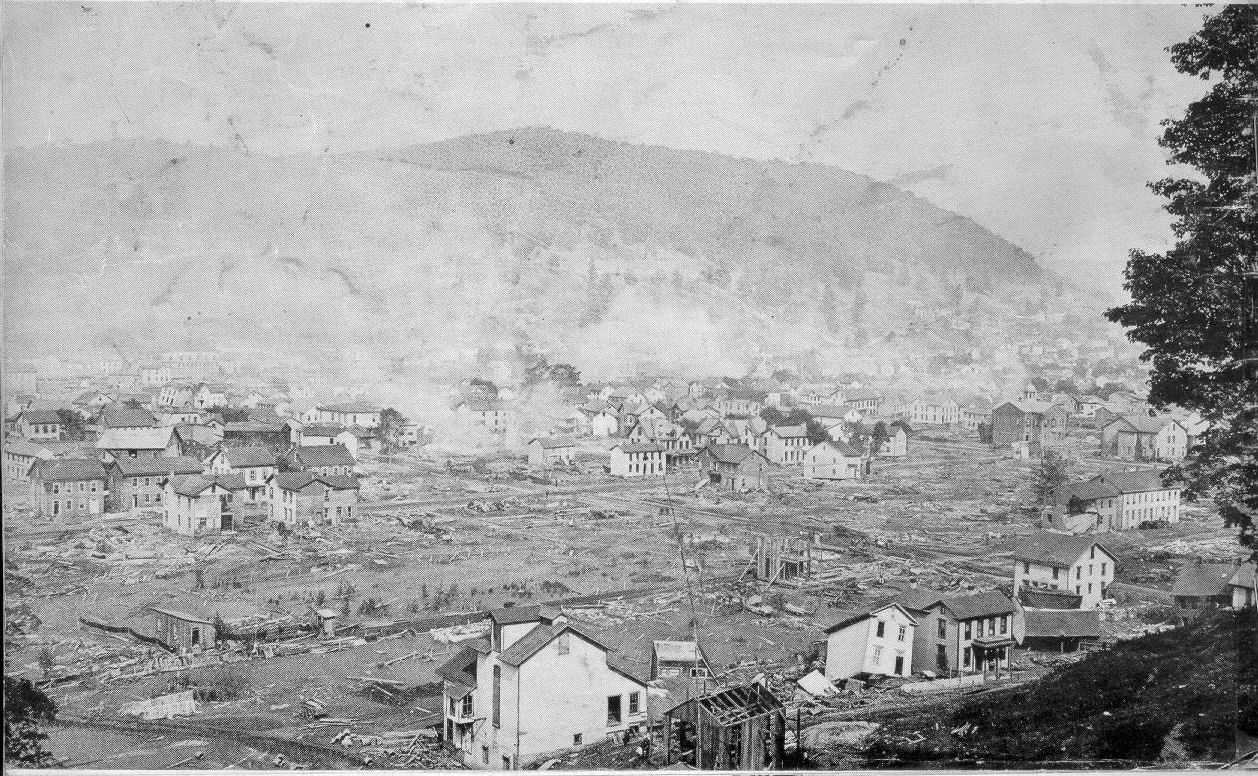
...the flood hit Johnstown. The residents were caught by surprise as the wall of water and debris bore down, traveling at 40 miles per hour (64 km/h) and reaching a height of 60 feet (18 m) in places.



-4:05 P.M.
It was now not quite an hour since the dam had given way. The rain was still coming down, but not so hard as before, and the sky overhead was noticeably brighter.
In Johnston the water in the streets seemed actually to be going down some. It had been a long, tiresome day in Johnstown, and the prospects for a night without gas or electricity were not especially cheerful, but by the looks of the water and the sky, the worst of it had passed. (McCullough 128)
-3:32 P.M.
But within seven minutes, the viaduct collapsed, allowing the flood to resume its course. However, owing to the delay at the stone arch, the flood waters gained renewed hydraulic head, resulting in a stronger, more abrupt wave of water hitting places downstream than otherwise would have been expected. The small town of Mineral Point, one mile...below the Conemaugh Viaduct, was the first populated place to be hit with this renewed force. About 30 families lived on the village's single street. After the flood, there were no structures, no topsoil, no sub-soil – only the bedrock was left. The death toll here was approximately 16 people. In 2009, studies showed that the flood's flow rate through the narrow valley exceeded 420,000 cubic feet per second (12,000 m3/s), comparable to the flow rate of the Mississippi River at its delta, which varies between 250,000 and 710,000 cu ft/s (7,000 and 20,000 m3/s).
...when this second dam let go, it did so even more suddenly and with greater violence that the first one. The bridge collapsed all at once, and the water exploded into the valley with its maximum power now concentrated again by the [six minute] delay...(McCullough 109)
...when the flood came, the wall of water swept through in such a way that it left almost nothing to suggest that there had ever been such a place as Mineral Point. The town was simply shaved off, right down to the bare rock. (Supra 111)
-3:25 P.M.
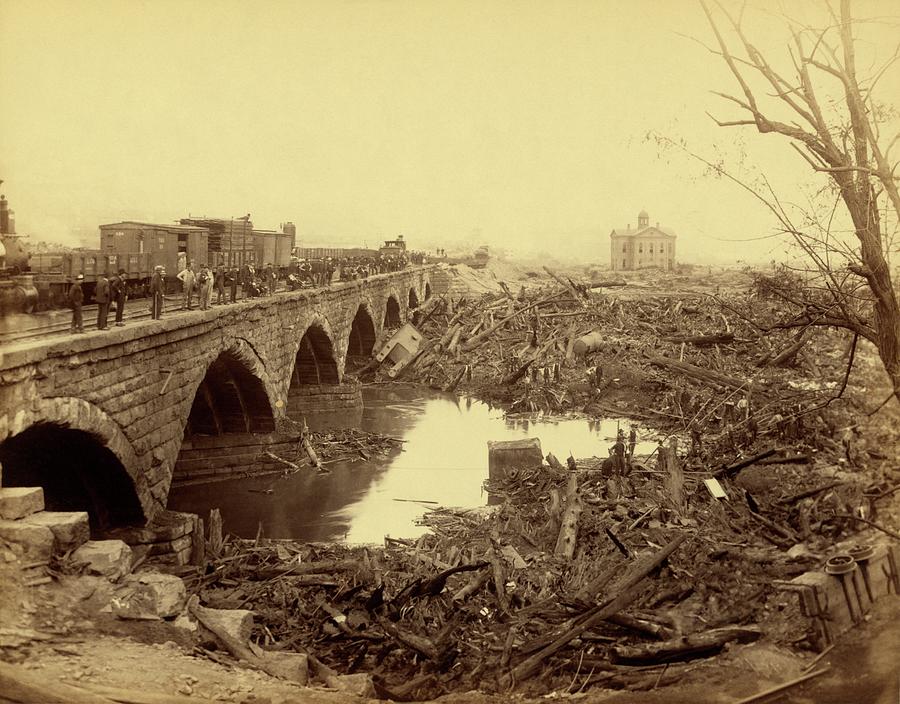
At the Conemaugh Viaduct, a 78-foot (24 m) high railroad bridge, the flood was momentarily stemmed when...debris jammed against the stone bridge's arch.
It was here...that the water smashed into its first major obstacle, a tremendous stone viaduct...built more than fifty years earlier...
The viaduct was one of the landmarks of the country. It stood seventy-five feet high...Even the biggest locomotives looked tiny by contrast as they chugged across it on their way up the mountain.
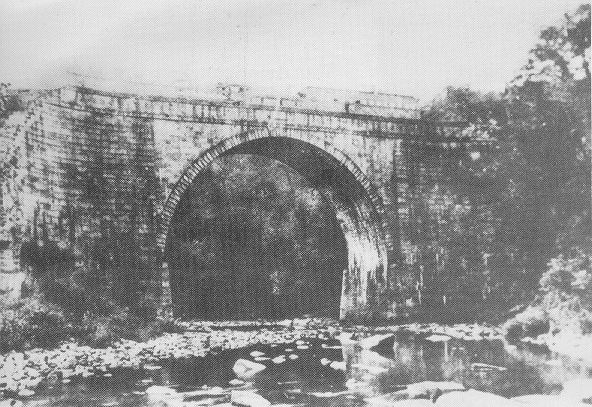
Now, for [six minutes], Lake Conemaugh formed again some five and a half miles downstream...It gathered itself together, held now by another dam, which however temporary was nonetheless as high as the first one...(McCullough 108-9)
-3:15 P.M.
"At 3:15 the Central Telephone office called the Tribune to say it had been informed by Agent Deckert, of the Pennsylvania Railroad station, that the South Fork Reservoir was getting worse all the time and that the danger of its breaking was increasing momentarily. It is idle to speculate what would be the result if this tremendous body of water--three miles long, a mile wide in places, and sixty feet deep at the breast at its normal stage--should be thrown into the already submerged Valley of the Conemaugh."-Swank.
No need to speculate, Tom, no need a'tall.
-3:10 P.M. May 31, 1889, Lake Conemaugh, South Fork, Pennsylvania


-3:00 P.M.
"At three o'clock the town sat down with its hands in its pockets to make the best of a very dreary situation. All that had got out of reach of the flood that could, and there was nothing to do but wait..."-George T. Swank, editor, Johnstown Tribune.
Tom didn't get the memos, ambiguous though they were.
-Near 3:00 P.M.
-2:45 P.M.
Wilson's last telegraph that the dam "may possibly go" received in Johnstown by ticket agent Deckert. Thirty minutes away from breaking...
-2:33 P.M.
Wilson's cool, ambiguous last telegraph was received in East Conemaugh. The dam was forty-two minutes from breaking.
-2:25 P.M.
-1:52 P.M.

-12:55 P.M.
-12:30 P.M.
-Between Noon and One O’Clock
The wires being down beyond Mineral Point, Pickerell "waited and waited" for someone to come past who could hand deliver his message to the next station over, East Conemaugh.
A railroad worker finally came by, Pickerell gave the message to him. The railroad worker gave it to his foreman at Buttermilk Falls who had the message sent by telegraph to East Conemaugh, Johnstown and to Robert Pitcairn's office in Pittsburgh. The message was received at those places between noon and one o'clock. (Ibid 93-95)
-Noon, Johnstown
-11:30 A.M., Lake Conemaugh
-11 A.M. Johnstown, Lake Conemaugh
-10 A.M., Johnstown

-9:55 A.M., Lake Conemaugh
-9:30 A.M., Johnstown
About then the rain started coming down again as hard as it had during the night, heavy and wind-driven...For another half-hour he and the boys set about placing his papers and other things well above the flood line of 1887, which was about a foot from the floor. (Ibid 81)
-9 A.M., Johnstown


-8:30 A.M., Lake Conemaugh
-7 A.M.
-6:30 A.M., Lake Conemaugh

The hard, cold rain that had started coming down the night before had eased off considerably by the morning of Friday, May 31. (McCullough p.79)


